
As the tech world prepares to converge on Las Vegas, Germany-based health tech startup Deep Care is heading to CES with a major milestone under its belt. The company has been named a Digital Health Honoree at the CES Innovation Awards 2026, recognizing its AI-powered Isa Resilience Coach for workplace stress prevention.
The CES Innovation Awards, organized by the Consumer Technology Association (CTA), celebrate excellence in design and engineering across 36 consumer technology categories. This year’s competition drew more than 3,600 product submissions, with honorees representing what judges consider the most impactful and forward-looking solutions.
An AI coach for everyday stress
Deep Care, headquartered in Ludwigsburg, specializes in AI-supported prevention technologies for the workplace. Its latest product, the Isa Resilience Coach, expands the company’s original ergonomics-focused platform into cognitive and mental health.
Already deployed by more than 250 companies and health insurers across Europe, Isa has been used to support musculoskeletal and metabolic health. The new resilience-focused iteration brings mental stress detection into the equation, targeting burnout, prolonged cognitive strain, and unhealthy work patterns.
The device is a compact, sensor-based system designed for desk workers. Using locally operated AI, it analyzes indicators such as breathing rate, micro-movements, and gaze behavior to detect early signs of stress. When patterns suggest fatigue or overload, users receive real-time nudges to adjust their behavior—encouraging breaks, movement, or recovery before productivity drops.
One practical example: Isa can detect how long someone has been deeply focused on a task and help balance sustained concentration with timely recovery—long enough to enter a flow state, but not so long that performance declines.
Privacy-first by design
Unlike many digital health tools, Isa operates without a camera or cloud connection, a design choice meant to address growing concerns around workplace surveillance and data protection. All analysis happens locally on the device, ensuring compliance with European data protection standards and minimizing privacy risks.
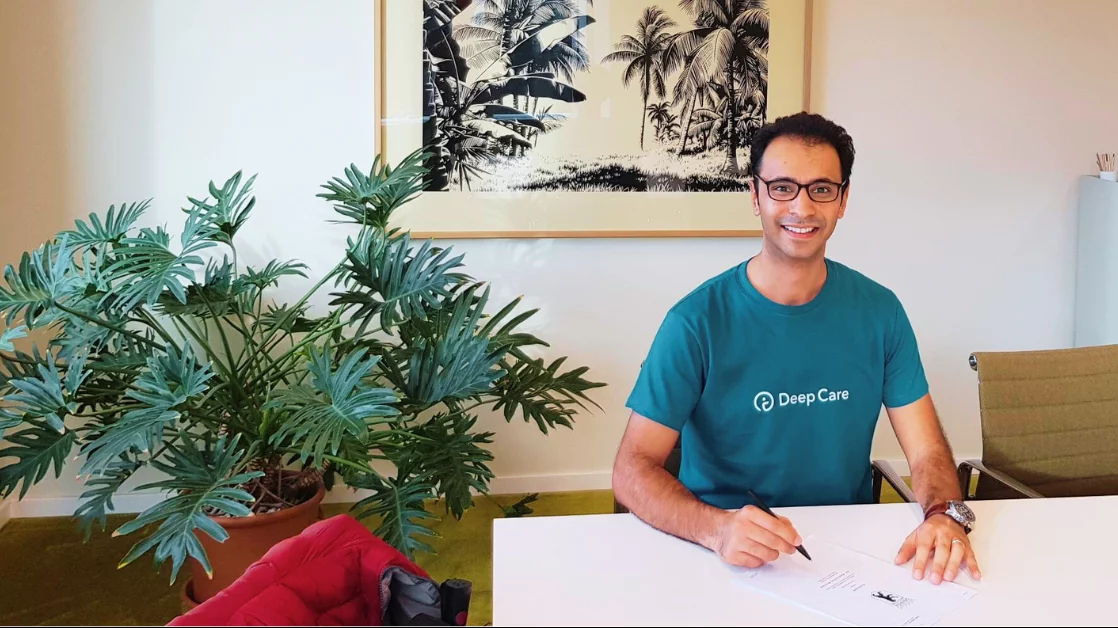
“We spend around eight hours a day sitting down, often for most of our working lives,” said Dr. Milad Geravand, CEO and co-founder of Deep Care. “Many people use wearables to optimize sleep, training, or recovery in their free time. But working habits—where we spend most of our day—largely go unnoticed. That’s exactly the gap Isa is designed to fill.”
Since its founding in 2020, Deep Care has focused primarily on occupational health management. While demand from employers and insurers has been strong, the company sees limits in relying solely on corporate budgets.
“If we are serious about real social impact, we can’t depend only on employers or health insurance providers,” Geravand said. “Our vision is that everyone who regularly works at a desk should have access to smart health support.”
This shift marks a broader ambition: positioning Isa not just as an enterprise tool, but as a consumer-facing lifestyle health product.
A gateway to the U.S. market
The CES recognition is also a strategic inflection point. Beyond validation, it supports Deep Care’s push into the United States. The startup has joined the German Accelerator Programme, established Deep Care Inc. in the U.S., and begun discussions with American partners in corporate health, insurance, and pilot customers.
According to the company, early pilot projects are already in preparation, with the Isa Resilience Coach expected to launch commercially in early 2026.
With its CES debut, Deep Care is betting that AI-driven, privacy-conscious prevention can become a standard fixture on desks worldwide—turning everyday work habits into a frontline for digital health innovation.