
AI’s impact across industries is unrelenting; from energy and retailing to the automotive and logistics sectors, the technology is predicted to shape how we buy, share, sell and move around the world.
Mckinsey, for one, found that most organizations are already experimenting or piloting AI technologies, although for many, its full promise still remains futuristic – even utopian.
AI, however, also poses change to how children learn and grow – and how they will ultimately impact the workforce as adults. Just after OpenAI’s ChatGPT was seismically launched into the market in 2022, for instance, Forbes reported most students had used the chatbot for homework assignments, raising questions about plagiarism, cheating, ethics, and learning in an AI-forward world.
On the flipside, Harvard Assistant Professor Ying Xu found that as AI companions are integrated into curriculums, homework assignments and classrooms, children are more likely to improve reading comprehension and expand their vocabulary.
Other benefits, from personalized learning experiences to enhanced administrative support, have been referred to by academics in advocating for AI’s role when enhancing student outcomes, teacher effectiveness and overall educational quality.
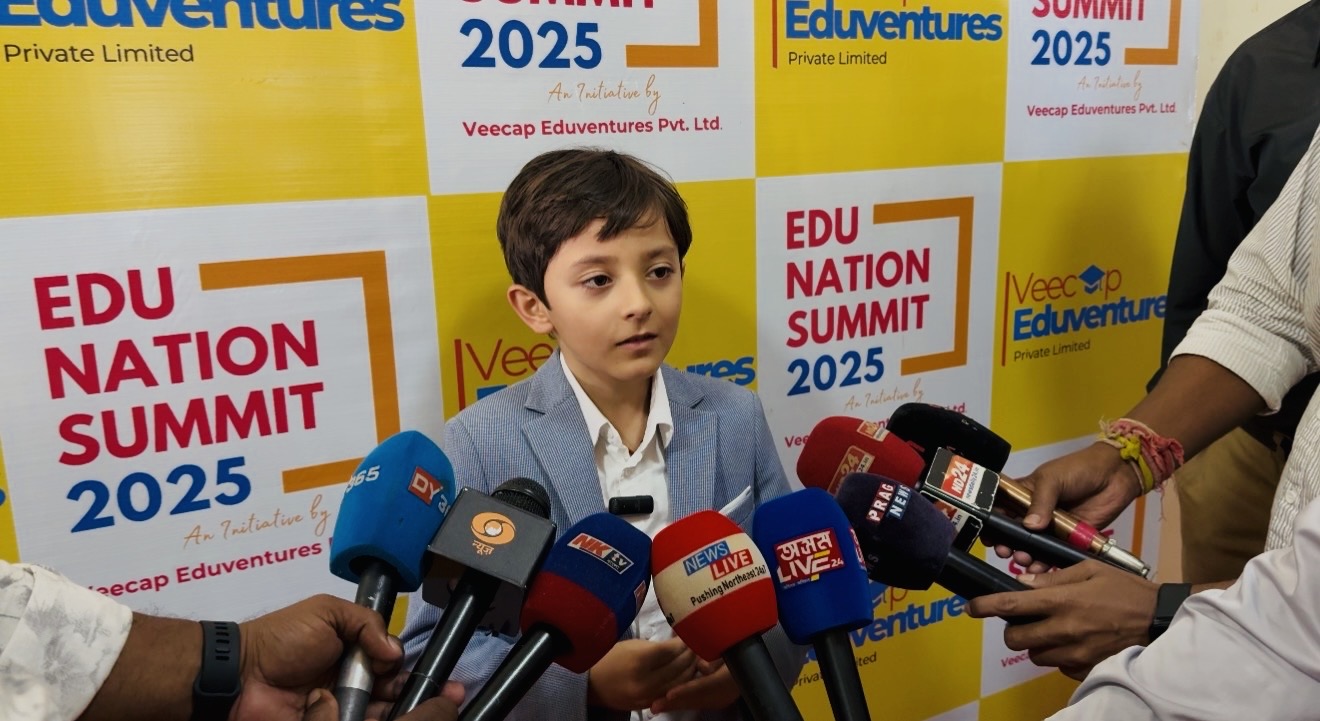
Bottom line: children, teenagers and young adults are already being exposed to AI technologies, seeking to leverage them in their daily lives. And, through founders like Bob Chopra, they are also increasingly engaging with the backstage of AI: programming, designing and commercializing.
At just eight years old, Chopra co-founded IvySchool.ai, an online education platform that helps learners build high-demand tech and business skills via expert-led courses and recognized certificates. From AI and computer science to data, entrepreneurship and business, Ivy seeks to help kids prepare for the AI-powered future they will surely inherit.
Chopra – who has earned certificates in computer science and entrepreneurship from Harvard, Stanford, MIT and Wharton – spoke with StartupBeat about the responsibilities he has taken on as a child founder, and how future generations can use today’s tools to prepare for tomorrow’s technologies.
Can you walk us through your journey from 7‑year‑old coder to 9‑year‑old CEO?
When I was seven, I was just curious. I played around with Hopscotch the way other kids play games – experimenting, breaking things, and having fun. I wasn’t trying to build a company.
But as I started taking computer science and entrepreneurship courses, I began connecting what I was learning in theory to what I could actually build in the real world. Coding stopped being just play and became a way to turn ideas into real projects.
As IvySchool.ai started to take shape and other students began using the same courses and systems I had learned from, the biggest change was how I saw myself. I stopped thinking only about what interested me and started thinking about responsibility, impact, and whether what I was building actually worked for others.
What was the moment when you realized the existing school system wasn’t preparing kids for an AI-first future, and how did that insight turn into IvySchool.ai?
The moment came when I was at Gulliver in Miami, one of the most elite schools in the country. We were using Kodable as part of the curriculum, which was fun, but that was basically the limit of “computer science.” There was no real entrepreneurship or AI-era thinking – not because the school didn’t care, but because that wasn’t the teachers’ expertise.
Around the same time, instead of watching YouTube creators like Mr. Beast, I started using Hopscotch to build things. My parents noticed that shift – from consuming to creating – and encouraged it. I began learning from young entrepreneurs and then took structured courses from MIT, Harvard, Stanford, and Wharton.
Eventually, my parents gave me a choice: go to boarding school or try building something of my own. That’s when it clicked. If these courses could prepare me for an AI-first world, they could prepare other kids too. IvySchool.ai started as a simple idea: give students access to the kind of future-ready education I had to search for on my own.
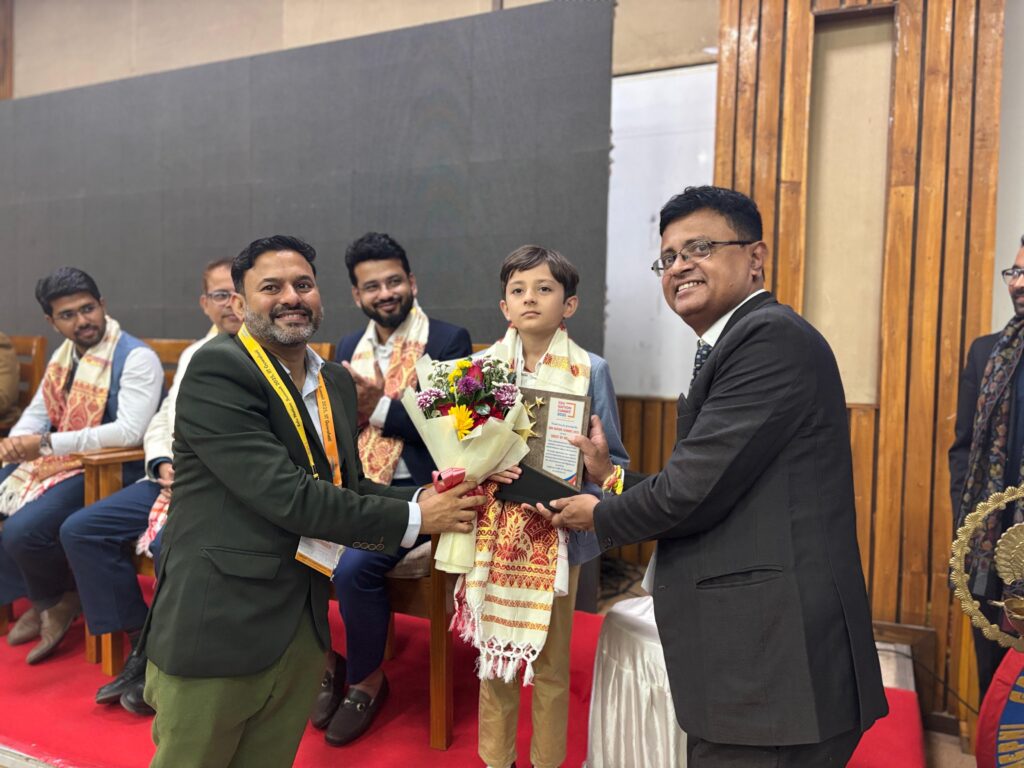
IvySchool calls itself a platform “designed by children for children.” What parts of the curriculum, teaching style or platform were shaped directly by you and your peers rather than adults?
When we say IvySchool is “designed by children for children,” it means we don’t guess what kids need – we build from how we actually learn.
I test everything myself first; if something feels boring, confusing, or too slow, we change it. The platform is designed the way kids naturally think: short challenges, hands-on projects, and the freedom to explore instead of just following instructions.
We focus on learning by building: coding real things, solving real problems, and applying ideas right away. Adults help with structure and safety, but the learning experience comes from a child’s point of view. That’s what makes it work for kids my age.
You have modeled IvySchool.ai’s curriculum on courses from institutions like Harvard, MIT and Stanford. How do you translate elite university experiences into something engaging and age appropriate for children?
IvySchool.ai is inspired by how places like Harvard, MIT, Stanford, IIT, and Wharton think about learning, but we don’t just model their frameworks – we actually provide certificates from Harvard, MIT, Stanford, and Wharton as part of the journey.
The challenge is translating that level of thinking for younger learners. We do that by breaking big ideas into small, hands-on steps. Instead of starting with theory, we start with building projects, experiments, and real problems kids care about.
Once they’re engaged, we layer in the concepts behind what they’ve built. It’s the same academic rigor, but delivered in a way that feels natural and exciting for kids, not overwhelming.
What does a typical learning journey for a new IvySchool.ai student look like?
A typical learning journey starts with building, not lectures. Kids jump into small projects – coding something, solving a challenge, or experimenting with an idea – and then learn the concepts as they go.
The platform adapts as they move forward, so if a student is flying through something, they get harder challenges, and if they’re stuck, we slow it down and approach it differently.
What surprises me most is how quickly kids can handle complex ideas when they’re motivated. They struggle the most when learning feels passive or disconnected from something real. But when they’re building something they care about, they often go way beyond what adults expect, both in speed and creativity.
How do you consider trust, safeguards, and ethical boundaries when you let kids experiment with AI tools?
I understand why traditional schools are cautious about AI; it’s powerful, and power needs responsibility. At IvySchool.ai, we think about trust, safeguards, and ethics from the start, not as an afterthought.
That’s why we built BobAI. BobAI isn’t just a tool that gives answers. It’s designed to guide how kids think, ask questions, and make decisions. We put clear boundaries in place so students use AI to learn with it, not depend on it. Kids are taught what AI can do, what it can’t do, and why human judgment still matters.
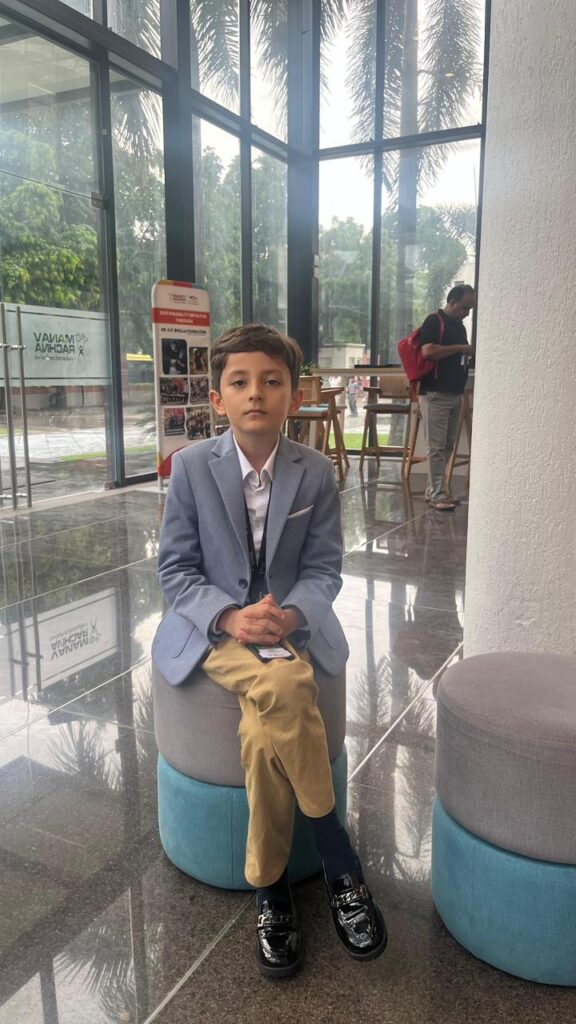
Ethics is part of the learning journey – understanding bias, responsibility, and the impact of what you build. The goal isn’t to make kids faster at using AI, but wiser in how they use it.
If you were sitting with school principals or education ministers, what would be your argument for making AI-literacy as fundamental as math or language skills?
AI will eventually sit behind every profession the way electricity sits behind every appliance. If children only learn how to use AI rather than how it works, we create a generation of consumers rather than creators.
AI literacy isn’t about producing more engineers; it’s about producing citizens who can reason, build, negotiate, and participate in a world increasingly mediated by intelligent systems.
What does operational excellence look like in an AI-first school run by a very young founder? How do you make decisions about mentor quality, project reviews, and safety?
Operational excellence for us means treating education with the rigor of a tech company and the empathy of a creative studio. We evaluate mentors the way elite firms evaluate engineers: not just based on credentials, but on how well they facilitate problem-solving, design thinking, and confidence. Project reviews are structured like mini design crits: students present, defend, and iterate. The goal isn’t to grade them, but to elevate their reasoning.
On safety, we take a layered approach. AI is a power tool, so we define what’s age-appropriate at each stage, audit prompts and outputs, and build transparent reporting into the platform.
When we scale to new cities or online cohorts, we don’t replicate classrooms – we replicate operating systems. The curriculum, data, mentorship model, and feedback loops are standardized; the local creativity is not. That’s how we keep quality high without flattening the experience.
Looking ahead to 2030, if IvySchool.ai succeeds in its mission, how will a typical day look different for a 10-year-old compared to today?
By 2030, a 10-year-old’s school day will feel less like assembly lines and more like studios. Instead of being told what to memorize, they’ll be designing, experimenting, collaborating with AI agents, and shipping real work.
Subjects will blur: math will show up in robotics; language will show up in interface design; ethics will show up in AI decision-making. Assessment will shift from right answers to outcomes and reasoning. And, instead of waiting 12 years to make something that matters, kids will be contributing by day one.
What do you hope your own role in education and technology will be by 2030?
I hope to be both a builder and an amplifier; builder, as someone who continues to invent new learning infrastructures; amplifier, as someone who opens doors for millions of kids who are just as curious, but never had access.
If IvySchool.ai succeeds, the real headline in 2030 won’t be that a kid became a CEO. It will be that childhood became a time for creation, not just preparation.
How do you balance being the “movement’s architect” with being a kid? Where do you draw the line so you don’t overwhelm yourself?
I balance it by being very structured with my time. From 9 to 12, I’m a student: I take my classes and focus on learning like any other kid. From 1 to 5, I work on IvySchool.ai, building, testing ideas, and improving the platform. After that, I’m done.
In the evenings and on weekends, I play tennis and practice capoeira, and I make sure I still have time just to be a kid. That structure helps me stay balanced. Having clear boundaries between learning, building, and play lets me work seriously without losing the fun and energy that make me who I am.

Disclosure: This article mentions clients of an Espacio portfolio company.