
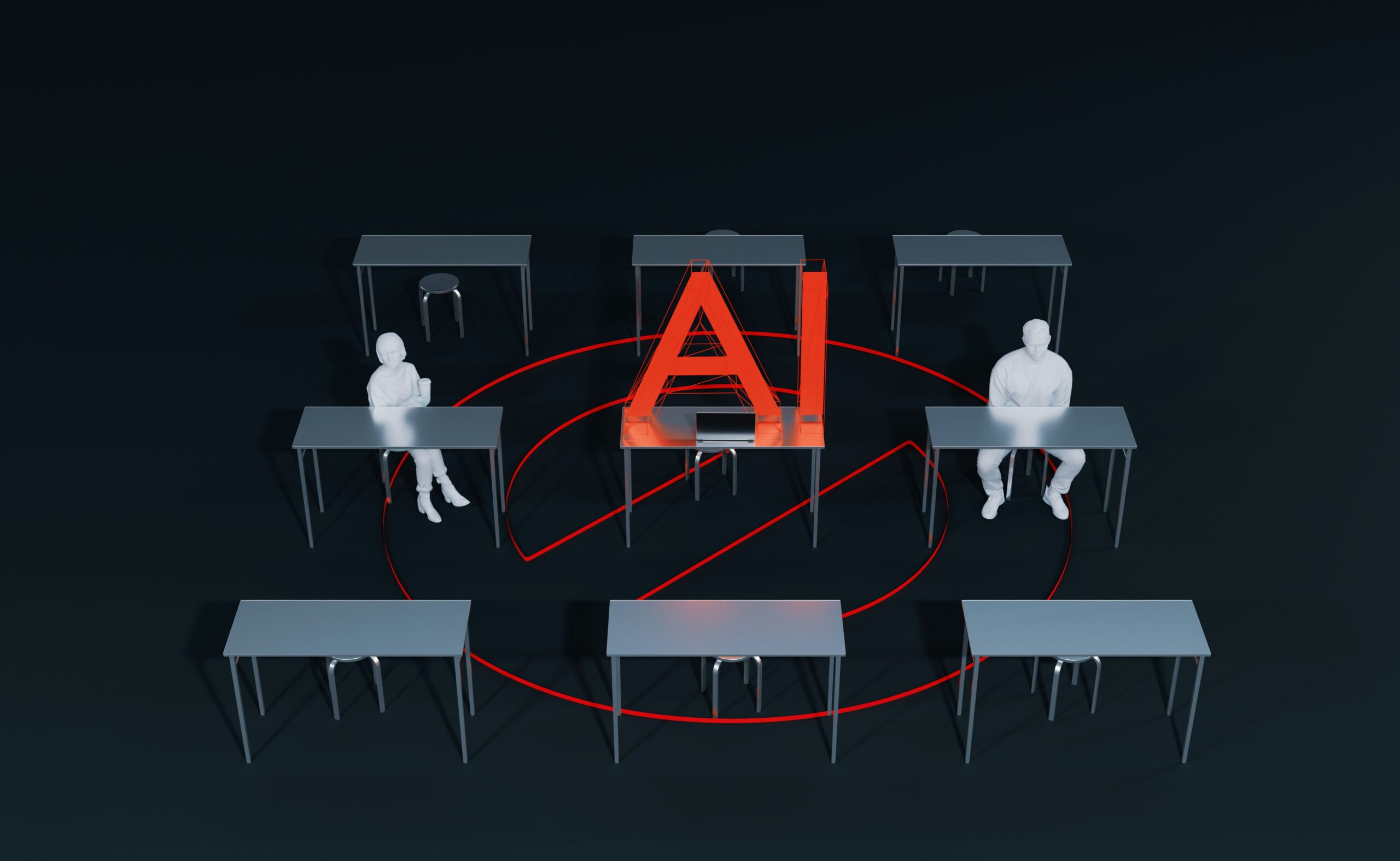
AI won’t fix broken DevOps. But it will expose it.
For years, DevOps has promised us the ultimate trifecta: faster releases, seamless collaboration, and rock-solid software. Naturally, organizations bought in. They poured massive budgets into CI/CD pipelines, embraced infrastructure as code, spun up containers, and built complex observability platforms.
Yet, if you sit down with almost any engineering leader today, you’ll hear the exact same frustrations:
- Why are we still spending weeks on a single release?
- Why do the same old deployment bugs keep tripping us up?
- Why is measuring developer productivity still such a headache?
- Why do unexpected incidents keep hijacking our roadmap?
The uncomfortable truth is that we’ve spent years optimizing automation, not decision-making.
Traditional DevOps is fantastic at repetitive, manual tasks. It builds, tests, and deploys exactly what we tell it to. But it doesn’t think. This is where AI changes the game. It isn’t just about writing code faster; it’s about introducing the ability to analyze, predict, recommend, and eventually execute complex engineering decisions—all with human oversight to keep things on track.
This isn’t the death of DevOps. Instead, it’s the beginning of its next evolution: intelligent engineering systems.
The organizations that lean into this shift early aren’t just going to deploy software faster. They’re going to build engineering cultures that actually learn, adapt, and improve on the fly.
The next bottleneck isn’t coding—it’s engineering complexity
The narrative around AI has largely focused on code generation.
Copilots can write functions.
LLMs can explain code.
Agents can generate tests.
Useful? Absolutely.
Transformational? Not by themselves.
Large enterprises rarely struggle because developers type too slowly. Their biggest challenges emerge elsewhere:
- Hundreds of interconnected microservices
- Legacy applications that cannot simply be rewritten
- Complex compliance requirements
- Multiple cloud environments
- Release coordination across global teams
- Growing security obligations
- Thousands of infrastructure changes every week
Shoving AI-generated code into a broken delivery pipeline doesn’t fix anything—it just accelerates the chaos. More code is only a win if your team can actually build, test, secure, deploy, and monitor it with confidence. That’s exactly why AI’s real superpower isn’t happening inside the IDE anymore; it’s happening around it.
Continuous delivery is becoming continuous intelligence
Traditional CI/CD pipelines answer one question:
“Can this code be deployed?”
AI enables a much more valuable question:
“Should this code be deployed right now?”
That difference changes everything.
Modern AI systems analyze signals from across the engineering ecosystem:
- historical deployment success
- test coverage
- infrastructure health
- production incidents
- service dependencies
- customer behavior
- change failure rates
- security vulnerabilities
- performance regressions
Instead of executing pipelines blindly, AI helps teams make smarter release decisions based on risk.
Imagine a deployment pipeline that automatically recognizes:
- this service has historically failed whenever these files changed together
- traffic patterns suggest delaying deployment by two hours
- a downstream dependency is already unstable
- rollback probability exceeds acceptable thresholds
These are decisions experienced release managers make today.
AI simply scales that expertise.
Continuous delivery is gradually evolving into continuous intelligence.
AI changes every stage of the DevOps lifecycle
Rather than replacing existing DevOps practices, AI strengthens each stage of the software delivery lifecycle.
Planning becomes predictive
Sprint planning often depends on historical estimates and individual experience.
AI introduces a richer perspective.
By analyzing delivery history, engineering velocity, production incidents, technical debt, and dependency graphs, AI helps teams identify:
- realistic sprint capacity
- delivery risks
- hidden blockers
- resource bottlenecks
- architectural hotspots
Planning becomes grounded in operational data rather than optimism.
Development becomes contextual
Developers already benefit from AI-assisted coding.
The next evolution is contextual engineering assistance.
Instead of merely suggesting code snippets, AI increasingly understands:
- enterprise architecture
- internal coding standards
- platform conventions
- reusable services
- security policies
- documentation
- previous implementation patterns
Developers spend less time searching for information and more time solving business problems.
Testing becomes adaptive
Regression suites continue growing. Execution times increase. Coverage gaps remain. AI is changing software testing in several ways:
- prioritizing high-risk test cases
- generating realistic test scenarios
- identifying redundant tests
- recommending missing edge cases
- predicting defect-prone components
- improving API test generation
Instead of running every test for every release, organizations can focus effort where risk actually exists.
Infrastructure becomes self-optimizing
Infrastructure teams have long automated provisions. AI expands automation into optimization. Modern AI systems can recommend:
- cloud cost improvements
- infrastructure scaling
- resource allocation
- capacity forecasting
- configuration drift correction
- performance tuning
Infrastructure becomes increasingly adaptive rather than static.
Security becomes continuous
Traditional security reviews often slow delivery.
AI enables earlier intervention. Rather than identifying vulnerabilities after development, intelligent systems continuously inspect:
- source code
- dependencies
- infrastructure configurations
- secrets management
- policy violations
- identity permissions
Security shifts further left without overwhelming developers.
Operations become proactive
Incident response remains one of the most expensive parts of software delivery.
AI helps operations teams detect patterns humans often miss. Instead of waiting for outages, intelligent observability platforms identify:
- anomaly patterns
- early warning indicators
- cascading failures
- probable root causes
- historical similarities
- recommended remediation actions
The objective isn’t eliminating engineers from incident management. It’s enabling them to solve problems before customers notice.
The rise of engineering intelligence platforms
Perhaps the biggest shift isn’t AI coding assistants. It’s engineering intelligence. Every engineering organization generates enormous amounts of operational data:
- commits
- pull requests
- deployments
- incidents
- ticket histories
- test results
- build failures
- infrastructure metrics
- observability signals
Historically, these datasets lived in separate tools.
- GitHub knew about commits.
- Jira knew about work.
- Jenkins knew about pipelines.
- Datadog knew about production.
Nobody connected the dots.
AI finally makes those relationships usable. Engineering intelligence platforms unify operational data into actionable insights that help leaders answer questions like:
- Why are releases slowing?
- Which teams are blocked?
- Which services generate the most operational risk?
- Where does technical debt impact delivery?
- Which engineering investments produce measurable business outcomes?
This moves DevOps beyond dashboards into decision support.
The biggest misconception: More AI equals faster delivery
This assumption deserves challenging. Many organizations are introducing AI into fragmented engineering ecosystems.
The result often looks like this:
- Developers generate more code.
- QA teams receive larger backlogs.
- Security reviews increase.
- Pipelines become longer.
- Production incidents rise.
- Velocity appears to improve while stability declines.
AI amplifies existing engineering systems—for better or worse. Organizations with mature engineering practices benefit dramatically. Organizations with fragmented workflows simply accelerate fragmentation. Before scaling AI, enterprises should ask:
- Is our engineering data connected?
- Are our delivery metrics trustworthy?
- Can we objectively measure productivity?
- Do we understand deployment risk?
- Are feedback loops fast enough?
Without these foundations, AI creates more noise than value.
Measuring what actually matters
For decades, software engineering has relied on misleading productivity metrics.
- Lines of code.
- Story points.
- Hours worked.
- Tickets closed.
AI makes these metrics even less meaningful. If AI writes half the code, what exactly are you measuring? The conversation must shift toward outcomes. High-performing engineering organizations increasingly focus on:
- deployment frequency
- lead time for changes
- change failure rate
- mean time to recovery
- engineering flow efficiency
- customer impact
- platform reliability
- developer experience
AI should improve these outcomes—not merely generate more software.
AI won’t replace DevOps engineers
Every major technology shift brings similar fears.
- Cloud would eliminate infrastructure teams.
- Automation would remove operations.
- Containers would simplify everything.
Reality proved more nuanced. AI won’t eliminate DevOps engineers. It changes what they spend time doing. Instead of manually reviewing logs, they’ll investigate AI-generated insights. Instead of writing repetitive deployment scripts, they’ll design intelligent delivery systems. Instead of reacting to failures, they’ll improve engineering resilience.
The role evolves from operator to engineering strategist. That’s a far more valuable contribution.
Enterprise adoption requires governance
Introducing AI into software delivery isn’t just a technology decision. It’s an operating model decision.
Successful enterprises establish governance around:
- responsible AI usage
- data privacy
- model transparency
- regulatory compliance
- security controls
- human approval workflows
- auditability
Especially in regulated industries, AI cannot become another uncontrolled shadow technology.
Engineering leaders need confidence that AI recommendations are explainable, traceable, and aligned with enterprise standards.
Why intelligent engineering matters more than intelligent tools
Most technology vendors showcase AI features. Fewer discuss engineering systems. That’s where the real opportunity lies. Enterprises rarely struggle because they lack another automation tool. They struggle because engineering information remains fragmented across dozens of disconnected platforms.
The future belongs to organizations that transform engineering into a connected, data-driven operating model.
That requires combining:
- engineering data
- AI
- cloud-native platforms
- observability
- automation
- governance
- human expertise
Together. Not as isolated initiatives.
Why Partner with Ness?
At Ness, we believe the future of DevOps isn’t simply AI-powered automation—it’s Intelligent Engineering.
That distinction matters. Adding AI to isolated stages of the software delivery lifecycle may improve individual tasks, but lasting transformation comes from connecting the entire engineering ecosystem through data, intelligence, and measurable outcomes.
Our approach combines deep engineering expertise with AI, cloud, platform engineering, and delivery excellence to help enterprises modernize how software is planned, built, tested, deployed, and operated.
Whether organizations are modernizing legacy platforms, building cloud-native applications, or scaling AI across global engineering teams, we help create delivery systems that are:
- Data-driven rather than intuition-led
- Predictive instead of reactive
- Secure by design
- Observable across the software lifecycle
- Continuously optimized through engineering intelligence
Our proprietary engineering accelerators further strengthen this approach. Combined with our expertise in cloud engineering, platform engineering, DevSecOps, AI, data engineering, and enterprise modernization, Ness helps organizations move beyond faster deployments toward engineering systems that continuously learn and improve.
Build engineering organizations that get smarter with every release
The future of DevOps isn’t defined by how many deployments your pipeline can execute.
It’s defined by how intelligently your engineering organization can make decisions before, during, and after every release.
If you’re looking to transform DevOps from a delivery function into a strategic business capability, Ness can help.
Discover how Intelligent Engineering can help your teams deliver software faster, improve resilience, reduce operational complexity, and turn AI into measurable business value.