Startups across healthcare and life sciences are racing to apply artificial intelligence to one of the industry’s most persistent problems: turning vast amounts of scientific data into actionable business intelligence.
Now, two companies believe they have found a scalable answer.
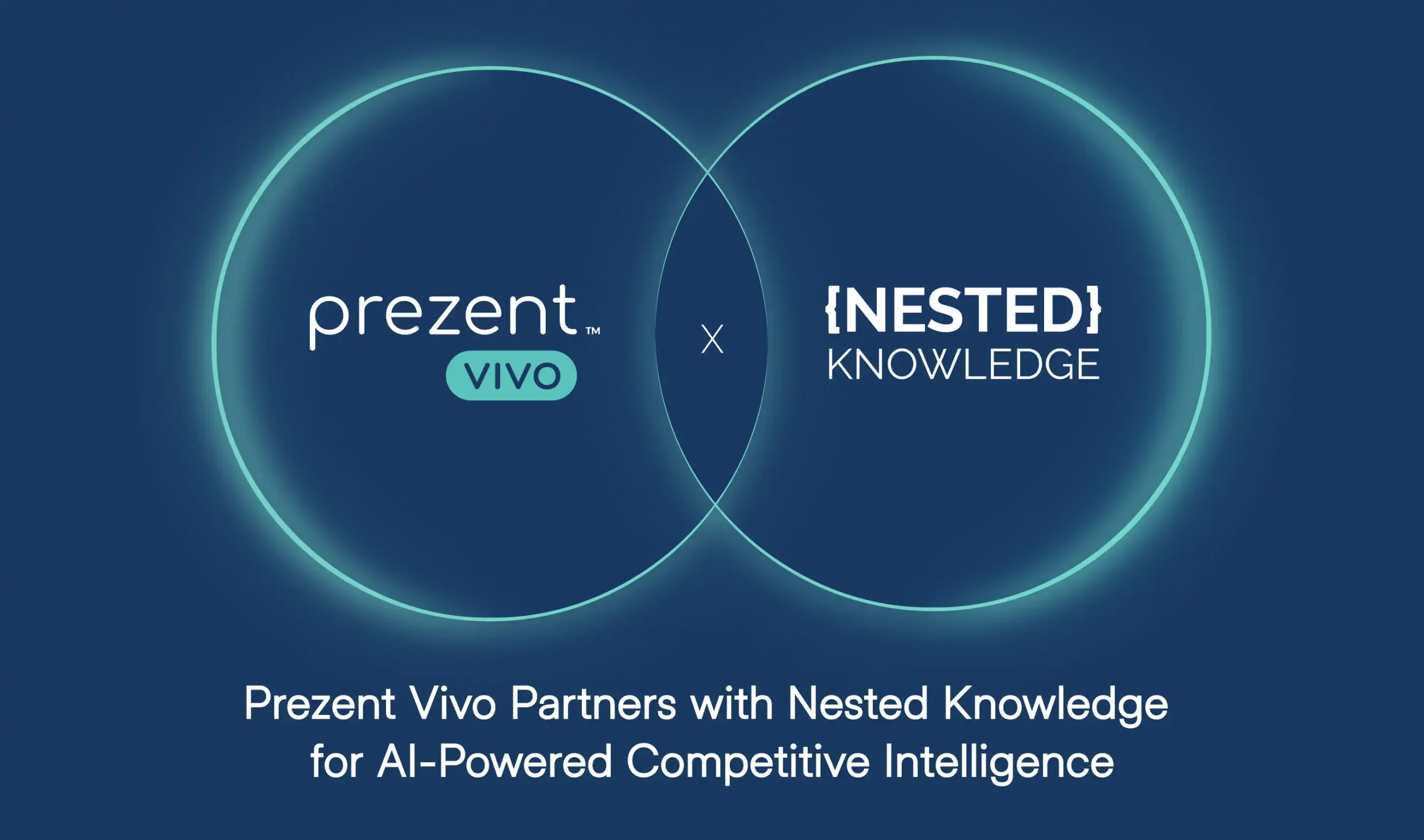
Prezent Vivo and Nested Knowledge announced a strategic partnership this week aimed at helping pharmaceutical and biotech organizations prepare for medical congresses, monitor competitors, and stay on top of emerging scientific evidence throughout the year.
The alliance combines Prezent Vivo’s AI-powered communications platform with Nested Knowledge’s automated evidence synthesis technology, creating what the companies describe as an end-to-end competitive intelligence solution.
From data to decisions
The move comes at a time when life sciences teams face mounting pressure to analyze larger volumes of information while making faster decisions. Scientific publications, clinical trial updates, regulatory developments, and congress presentations generate an enormous flow of data that often overwhelms medical and commercial teams.
Nested Knowledge has built its business around addressing part of that challenge. Its AutoLit® platform automates literature reviews and evidence synthesis, enabling organizations to complete analyses in under 30 minutes and reducing systematic review timelines by more than 70%.
Prezent Vivo tackles the next step in the process. Its AI-plus-human expertise model converts scientific findings and business intelligence into tailored communications and decision-support materials that teams can use immediately.
Together, the companies are positioning themselves as a unified solution for organizations seeking both rapid evidence generation and practical execution.

The partnership emerged after both companies identified a common customer pain point. Despite the availability of high-quality scientific evidence, many organizations still spend weeks translating fragmented information into formats suitable for launch planning, congress preparation, medical affairs activities, and competitive analysis.
“Life sciences organizations have access to more intelligence than ever before, but accessing and using it effectively remains a challenge,” said Francine Carrick, President of Prezent Vivo.
The combined offering includes congress intelligence packages, continuously updated evidence summaries, on-demand competitive deep dives, and customized reports designed for different stakeholder groups ranging from Medical Affairs to Market Access teams.
The launch coincides with a particularly active period in the medical conference calendar. Major events such as ASCO, EHA, and ISTH are expected to release significant amounts of new clinical data that can rapidly alter competitive dynamics.
Under the partnership, customers will receive pre-congress briefings, as well as near real-time synthesis of newly presented findings once events are underway.
For Nested Knowledge, the partnership also expands the commercial reach of its evidence synthesis capabilities.
“Evidence synthesis has always been a crucial capability for life sciences organizations, but the value erodes when insights arrive too late or are buried in formats that field teams cannot use,” said CEO Kevin Kallmes.
The broader opportunity may extend beyond congress preparation. As AI adoption accelerates across healthcare, industry leaders are increasingly looking for integrated operating models that combine automation with human expertise rather than relying on disconnected point solutions.
That trend is creating opportunities for specialized startups capable of solving specific workflow challenges while delivering measurable productivity gains.
With life sciences companies under growing pressure to make faster and better-informed decisions, Prezent Vivo and Nested Knowledge are betting that intelligence alone is no longer enough. The winners may be the companies that can turn information into action at scale.